Visitor Guide
The Ghibli Museum in Mitaka opened in 2001 and was designed personally by Hayao Miyazaki with a specific philosophy: it should feel like you are walking around inside a Studio Ghibli film rather than looking at one from the outside. There is no prescribed route through the museum. The layout deliberately eschews signage and linear progression in favor of winding staircases, unexpected rooms, and the invitation to get pleasantly lost. This is not a metaphor — the physical structure has stairs that lead to landings that open into unexpected galleries, and the design assumes that discovery rather than efficiency is the point.
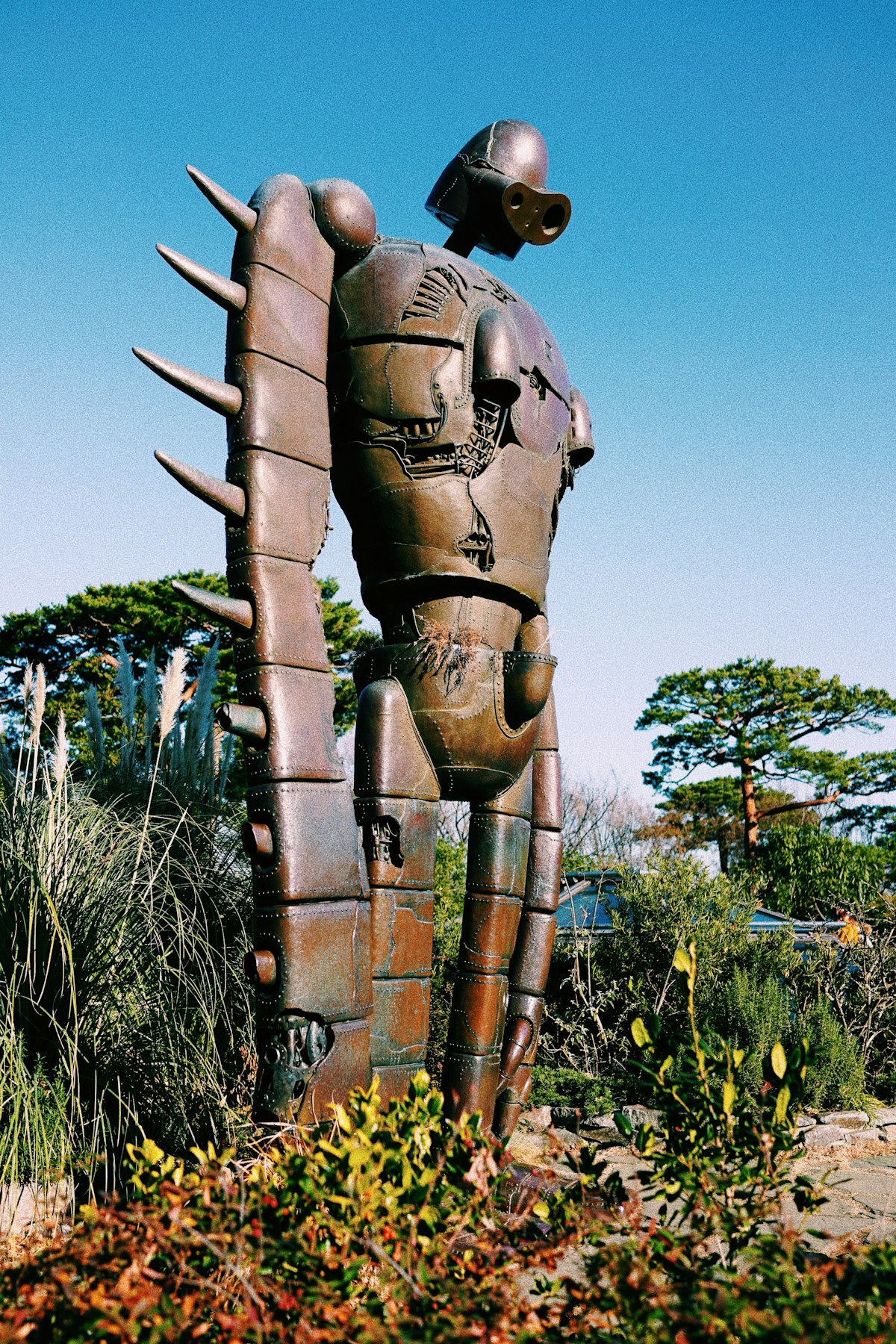
The museum's permanent exhibits trace the process of animation from rough pencil tests to finished scenes, with actual original cels, storyboard pages, and animation desks from Ghibli productions displayed in ways that reveal the extraordinary labor behind each frame. A signature installation shows a zoetrope featuring characters from the films in three-dimensional form — when it spins at the correct speed under strobe lighting, Totoro, the soot sprites, and other characters appear to genuinely move. The rooftop hosts a life-sized Robot Soldier from Castle in the Sky, weathered by years of outdoor exposure into something that looks as if it fell from the sky some time ago and simply decided to stay. The small indoor theater screens original short films produced exclusively for the museum — they have never been released commercially and are only viewable here.
Visiting the museum is a fundamentally different experience from most attractions of its type. Photography restrictions inside most exhibit areas are strictly enforced, which means you will have to actually look rather than document, a practice that turns out to be more rewarding. The Straw Hat Café within the museum serves simple food and drinks with Ghibli-themed touches, and the gift shop (Mamma Aiuto) stocks museum-exclusive merchandise unavailable elsewhere — the small storyboard books, limited prints, and character pins sell out quickly and are worth prioritizing early in your visit.
Tickets are the critical planning consideration: the Ghibli Museum sells timed entry tickets exclusively through the JTB ticketing system, and they open approximately three months in advance. International visitors can purchase through authorized overseas agents or through JTB's English-language platform, but demand far outstrips supply and popular dates sell out within hours of becoming available. Set a reminder. Go to the ticket page early. There is no standby line and no walk-up admission — arriving without a ticket means you watch the exterior and leave disappointed. The museum is located in Inokashira Park in Mitaka, about 15 minutes by train from Shinjuku Station; many visitors combine the museum with a walk through the park and a visit to Kichijoji, the charming neighborhood just outside the park gates.
Kichijoji is genuinely one of Tokyo's most pleasant neighborhoods and rewards time before or after the museum. Inokashira Park itself has a lake, paddle boats, and the Inokashira Park Zoo with a Ghibli-adjacent character thanks to its resident capybaras. The neighborhood around the park entrance has excellent coffee shops, ramen, and the kind of independent clothing and bookstores that make Kichijoji consistently rank among Tokyo residents' favorite places to live. Budget at least a half-day for the museum alone, and a full day if you plan to explore the surrounding area properly.
Plan Your Quest
Ready to experience the magic of this destination? Visit the official website or book your entry tickets directly through our partner booking link.
Visit Official Website / Book TicketsAttraction Info
Location
Mitaka, Tokyo
Destination
Tokyo
Category
Museum
Planning Note
Attractions in this category are highly popular among travelers. We strongly advise checking booking constraints and slot availability in advance to ensure smooth entry.