Visitor Guide
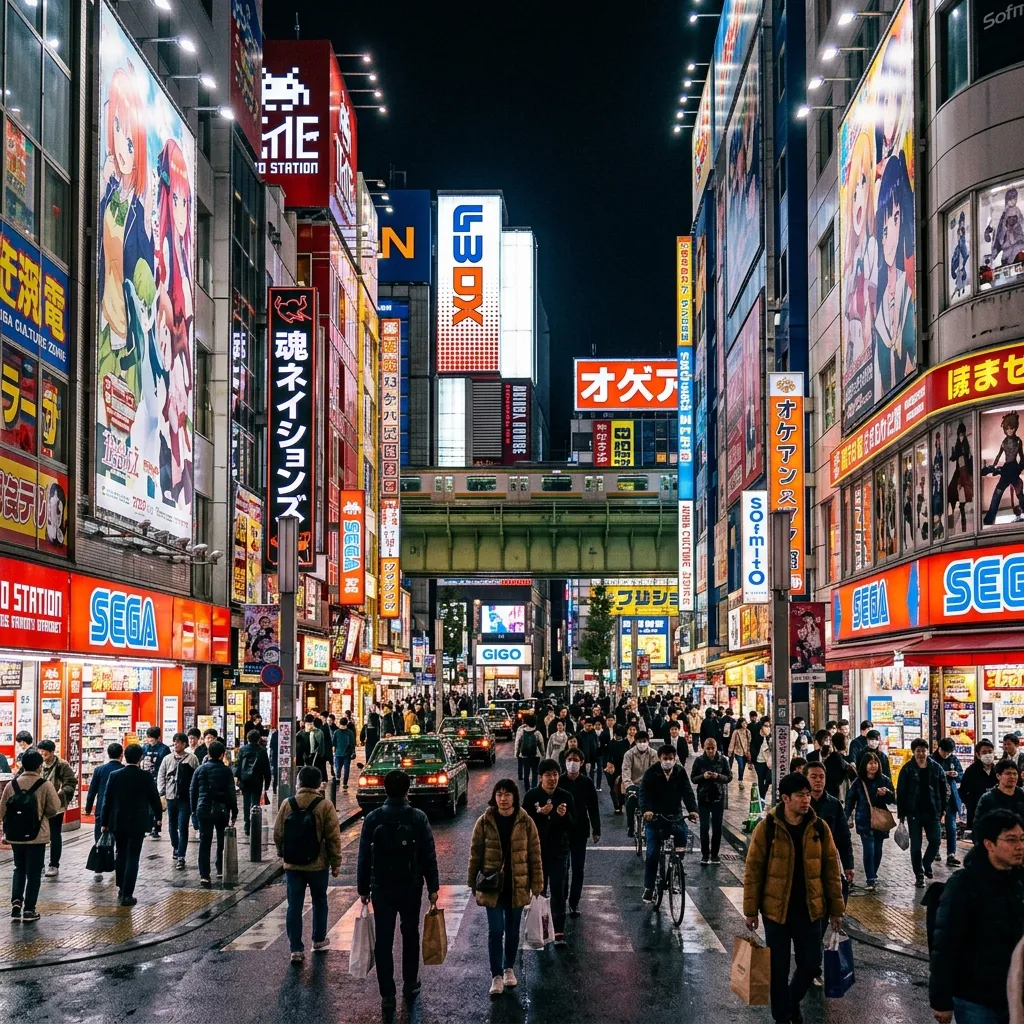
Akihabara's origin story is genuinely strange and explains why it became what it is. After World War II, the area around Akihabara Station became a black market hub for electronic components — radio parts, vacuum tubes, and early postwar electronics found their way there when they couldn't be acquired through official channels. As Japan's economy recovered and consumer electronics boomed, the area formalized into a legitimate electronics retail district. By the 1980s it was the destination for early adopters seeking cutting-edge tech. Then anime, manga, and gaming culture absorbed and transformed it, and by the 1990s Akihabara had become the global capital of otaku culture — a status it has held firmly ever since.
What makes Akihabara irreplaceable for fans is the density and depth of inventory that simply does not exist anywhere else. The main drag (Chuo-dori) and its surrounding side streets contain multi-story buildings dedicated to anime figures and merchandise (Kotobukiya, Animate, and the legendary Mandarake complex), retro gaming (Super Potato has four floors of cartridges, consoles, and peripherals going back to the earliest home gaming systems), electronics (Yodobashi Camera's massive Akihabara store covers almost everything electronic in existence), and maid cafes. The side streets off Chuo-dori are where the serious hunting happens — smaller shops specializing in vintage figures, out-of-print manga, rare import games, and bootleg-adjacent merchandise that ranges from fascinating to legally questionable.
A proper Akihabara visit requires at least a full day, and a serious collector should plan two. The logical approach: start at the Akihabara UDX building's second floor for an orientation overview, then work systematically south along Chuo-dori into the side streets. Super Potato deserves a full hour minimum — their pricing is transparent and their inventory is extraordinary. Mandarake's six-floor complex has used figures, doujinshi, vintage toys, and electronics, all at prices significantly below the new retail equivalent. Budget generously; the yen-denominated pricing feels reasonable until you calculate the exchange rate on fifteen separate purchases.
Practical Akihabara logistics: the shopping buildings close around 8-9 PM, but the area stays lively later with restaurants and a handful of bars. Most shops accept major credit cards, but some smaller specialty stores are still cash-preferred — stop at the 7-Eleven ATM for yen before you start. Shipping services are available from multiple shops for large purchases, and Japan Post at the main Akihabara post office is reliable for international shipping if you run out of luggage space. Visiting on weekday mornings means thinner crowds; Saturday afternoons are peak chaos, which has its own energy but makes methodical shopping harder.
Akihabara sits on the JR Yamanote Line, making it trivially accessible from any major Tokyo hotel. The walk from Akihabara Station to the main shopping district takes about three minutes. Surrounding neighborhoods worth combining in the same day include Ueno (north, with national museums and Ueno Park), Kanda (west, with excellent used bookstores and Jinbocho's famous secondhand book district), and Asakusa (northeast, with Senso-ji temple and traditional crafts). After dark, a meal at one of the ramen shops near the station offers a grounding counterpoint to the day's sensory overload.
Plan Your Quest
Ready to experience the magic of this destination? Visit the official website or book your entry tickets directly through our partner booking link.
Visit Official Website / Book TicketsAttraction Info
Location
Akihabara, Tokyo
Destination
Tokyo
Category
Shopping District
Planning Note
Attractions in this category are highly popular among travelers. We strongly advise checking booking constraints and slot availability in advance to ensure smooth entry.